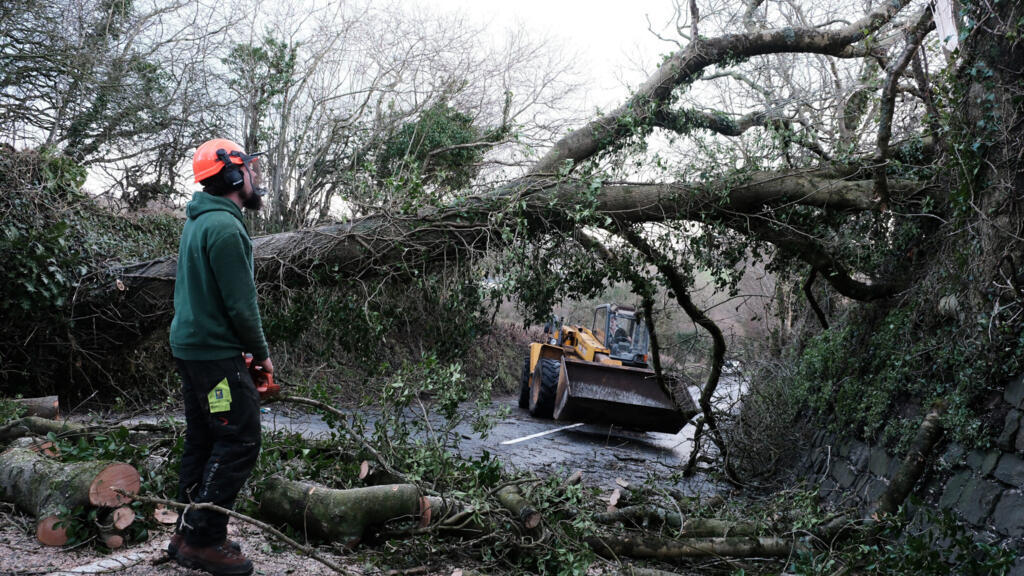
Storm Goretti made headlines across northern Europe on Friday, having a severe impact on several countries, particularly the United Kingdom and France. The storm was characterized by heavy winds and adverse weather conditions, which resulted in a tragic incident in the UK where a tree fell on a caravan, leading to the death of one man. This unfortunate event highlights the devastating effects of extreme weather on human life and property.
As the storm continued its path through the region, its effects were felt predominantly in France, where the power infrastructure bore the brunt of Goretti's ferocity. By Saturday, reports indicated that approximately 100,000 homes in France were left without electricity. The disruption in power services posed significant challenges for residents, many of whom faced the cold winter temperatures without heating or essential electrical services.
The storm's impact was broader than just property damage and power outages. Emergency services were placed on high alert in various areas, anticipating further repercussions as the storm progressed. Authorities urged residents to stay indoors and avoid unnecessary travel, especially given the hazardous conditions brought on by high winds and potential flooding—two common outcomes during severe storms.
In response to the storm, local governments initiated emergency protocols to manage the situation, including deploying repair crews to restore power and clear paths blocked by fallen trees and debris. These measures were essential in ensuring public safety and minimizing further disruption to the daily lives of affected residents.
Furthermore, with weather forecast models indicating that Storm Goretti might continue to affect the region for the weekend, meteorological experts closely monitored the storm's trajectory. Forecasts suggested that as Goretti moved further inland, its intensity could either diminish or transform, bringing different challenges, such as the potential for snow in higher altitudes and continued rain in others.
Communities affected by the storm, particularly in rural areas, faced the challenge of isolation due to blocked roads and downed trees. This raised serious concerns regarding response times for emergency services and the accessibility of resources. Schools and businesses were also impacted, with many facilities temporarily closing in anticipation of worsening weather conditions. The situation underscored the need for robust disaster preparedness plans not just at the individual household level, but throughout communities.
The overall disruption caused by Storm Goretti serves as a solemn reminder of the increasing frequency and severity of extreme weather events often attributed to climate change. As such storms become more commonplace, there is an urgent need for adaptive strategies to mitigate their impact, protect vulnerable populations, and enhance resilience in affected regions.
In the face of such challenges, the cooperation between governmental agencies, utility companies, and local communities becomes essential for swift recovery and support. Moving forward, it is crucial for these entities to focus on improving infrastructure and emergency response protocols. The lessons learned from Storm Goretti will likely motivate discussions centered on climate adaptation and the importance of readiness for future storms of similar or greater magnitude.