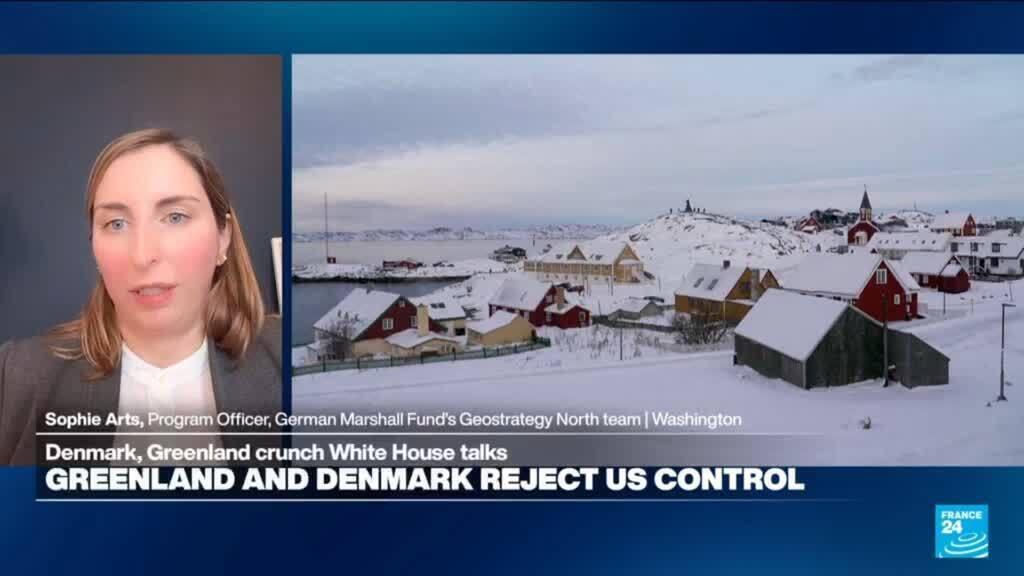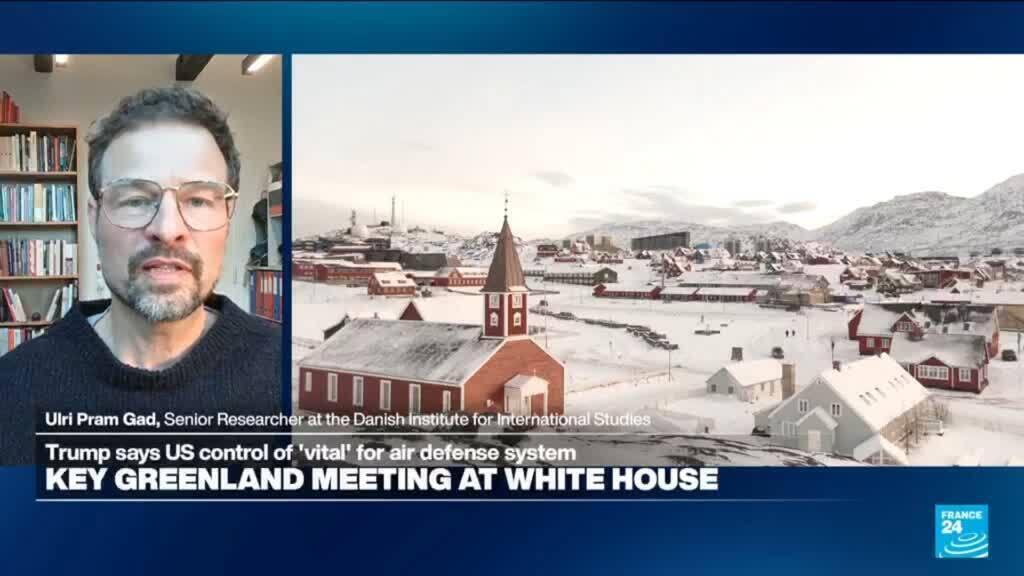
The recent White House meeting involving officials from Greenland, Denmark, and the United States emphasizes the intricate geopolitical balance that Greenland is navigating. This meeting comes against a backdrop of historical ties and modern aspirations that shape the dynamics in the Arctic region. As global powers increasingly focus their attention on this strategically important area, climate change, commercial interests, and issues of sovereignty are tightly interwoven, presenting a complex scenario for Greenland.
In the meeting, Ulrik Pram Gad, a Senior Researcher at the Danish Institute for International Studies (DIIS), articulated Greenland's position clearly. He stated that the island is "not for sale, but open for business." This statement encapsulates Greenland's firm stance against external pressures while simultaneously inviting international partnerships that can foster economic development. Given the melting polar ice and significant natural resources, Greenland is becoming an area of interest for superpowers, particularly the United States and China, who view the Arctic as a crucial area for strategic expansion and resource extraction.
Historically, Greenland has been deeply connected with Denmark, its colonial power, but it has also enjoyed a certain degree of autonomy since gaining home rule in 1979, with further expansions of self-governance following in 2009. This evolving relationship allows Greenland to assert its sovereignty while also seeking to stimulate local economic growth. As climate change opens new shipping routes and exposes untapped resources beneath the Arctic ice, Greenland stands at a crossroads where its decisions will significantly impact both its future and the wider geopolitical landscape.
The Arctic region is facing rapid changes due to climate change, including melting glaciers and shifting wildlife patterns, which presents both challenges and opportunities. Increased accessibility to resources like oil, gas, and minerals has attracted the attention of numerous stakeholders. Countries like China have shown interest in investing in Greenland's infrastructure, while the U.S. has been working to strengthen its strategic partnerships in the Arctic. This triangle of interest poses a delicate balancing act for Greenland, which aims to maintain its sovereignty while attracting international investment.
Furthermore, the geopolitical climate cannot be understated. As tensions rise between the U.S. and China, Greenland's role could become even more pronounced. The island serves as a critical point in the Arctic, making it a focal area for military and economic strategies. The U.S. reestablishing its presence in Greenland. Meanwhile, China's ambitions in the Arctic also raise concerns about the implications of foreign investment on Greenland’s autonomy and natural resources.
Greenland's leaders understand the importance of navigating these international relationships carefully. They seek to harness the interests of global powers to boost their economy without compromising their independence. Enhanced cooperation with Denmark reinforces this relationship, with both nations benefiting from mutual support and understanding as they address the challenges posed by external interests.
In summary, the recent White House meeting illustrates the delicate balancing act that Greenland is engaged in, navigating historical ties, modern aspirations, and the projection of global power within the Arctic. As climate change reshapes the region, Greenland remains focused on asserting its sovereignty while remaining open to international business opportunities, signaling a new era in its diplomacy and economic strategy that supporters of the island's autonomy will be closely watching.