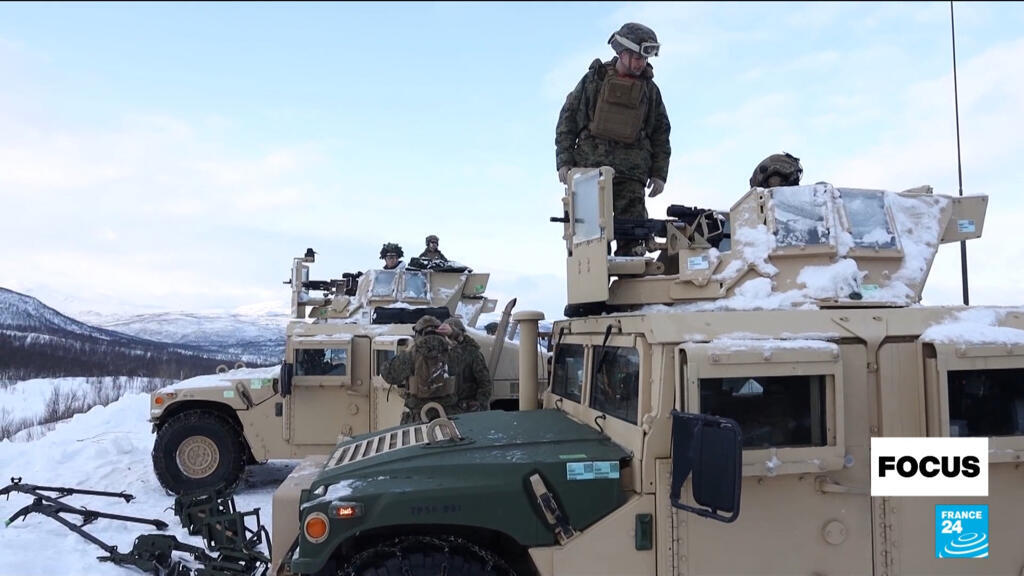
Escalating Tensions in the Far North: NATO's Large-Scale Exercise
As the world shifts its attention to the ongoing conflicts in the Middle East, another significant geopolitical scenario is unfolding in the Far North. In response to the growing threat posed by Russia, NATO has recently conducted a large-scale military exercise that simulates a hypothetical invasion by Russian forces. This event serves not only as a preparation for potential aggression but also as a demonstration of solidarity and readiness among NATO member countries.
The military exercise brought together an impressive array of military resources, including armoured vehicles, ships, and helicopters. More than 10,000 soldiers took part in this operation, highlighting the alliance's commitment to collective defense. These troops braved harsh sub-zero temperatures, testing their endurance and operational capabilities in a challenging Arctic environment. The exercise involved both ground and aerial units, aiming to assess the troops' coordination and effectiveness in a simulated combat scenario.
The location of the exercise, which remains undisclosed for security reasons, was carefully chosen to mimic conditions that could be encountered in the event of a real conflict in the region. The ability to deploy troops rapidly and effectively, even in severe weather, is crucial for maintaining NATO's strategic advantage. The exercise has attracted attention from military analysts and global policymakers, as it clearly conveys a message to Moscow: NATO is prepared to defend its Eastern European allies against any potential aggression.
This military demonstration comes at a time of heightened tensions between NATO and Russia, particularly after the ongoing conflict in Ukraine. Relations have soured significantly since 2014, following Russia's annexation of Crimea and its support for separatist movements in Eastern Ukraine. In this context, NATO's maneuvers in the Far North are viewed as a necessary step to bolster deterrence and ensure the security of member nations, especially those in close proximity to Russia.
In addition to the military readiness aspect, this exercise also underscores the importance of unity among NATO allies. Countries such as the United States, Canada, and various European nations participated, showcasing their commitment to collective defense. This joint effort sends a strong message not only to Russia but also to NATO's own member states, reinforcing the principle of solidarity in the face of external threats.
The use of advanced technology, including drones and cyber warfare capabilities, was also a focal point of the exercise. Cybersecurity has become increasingly vital in modern warfare, and NATO's ability to protect its digital infrastructure is as critical as its traditional military strengths. This integration of technology into training exercises reflects a modern approach to deterrence, preparing NATO forces for a range of scenarios they might face in the future.
As NATO continues to ramp up its military exercises in response to regional threats, the global community watches closely. Analysts suggest that these developments could lead to further militarization of the Arctic region, as nations vie for influence over its strategic waterways and resources. The presence of NATO forces in the Far North could set the stage for a new phase of confrontation, emphasizing the critical importance of dialogue and diplomacy alongside military readiness.
In conclusion, the recent NATO exercise in the Far North is a significant indicator of the alliance's strategic posture against potential Russian aggression. It highlights the importance of military preparedness and international cooperation in ensuring regional security. As geopolitical tensions rise, these exercises will likely continue to play a pivotal role in maintaining peace and stability in the region.